
What Is
Schutzhund / IGP
Schutzhund, now known as IGP, is a structured dog sport that tests teamwork, control, and working ability through three phases: tracking, obedience, and protection. It focuses on building a confident, reliable dog with strong handler communication and clear control.
Its History
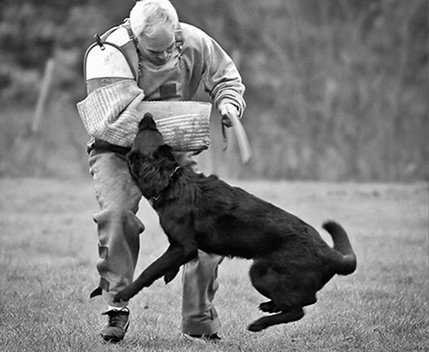
Schutzhund was originally developed in Germany in the early 1900s as a temperament evaluation used to identify and validate the qualities necessary for a successful working German Shepherd Dog.
These qualities include:
- Courage
- Trainability and control
- Intelligence
- Strong bond to the handler
- Protective instinct combined with sociability
- Agility, athleticism and strength
- Scenting ability
Over time, Schutzhund developed into an internationally recognized working dog sport with standardized rules, titles, and judging systems used across the world. In 2012, the sport was officially renamed IGP (Internationale Gebrauchshunde Prüfungsordnung) to reflect its global scope and unified regulations. Today, tens of thousands of handlers and dogs from a wide variety of breeds participate annually, training and competing under the same international standards.
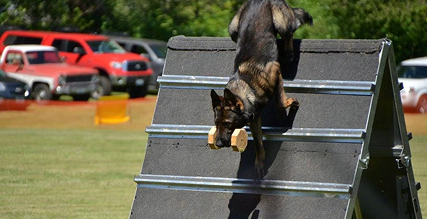
As a working dog sport, Schutzhund/IGP offers dog owners a structured and challenging way to develop advanced obedience, tracking skills, and controlled protection work. Competition provides recognition of both the handler’s ability to train, handle, and read their dog, and the dog’s ability to perform with reliability, confidence, and precision under pressure. The sport emphasizes teamwork, clarity, and consistency, making it as much about the relationship between handler and dog as it is about performance.
The Trials and Training
IGP competitions, known as trials, consist of three phases: Tracking, Obedience, and Protection. Much like a triathlon, the dog and handler team must successfully complete and pass all three phases in a single trial to advance to the next level. The progression of titles includes BH, IGP 1, IGP 2, and IGP 3, with trials for each level held regionally, nationally, and internationally throughout the year.
Each phase tests a different set of skills, natural abilities, and working traits, highlighting the dog’s versatility and the handler’s training and handling skills. To be competitive, teams train year-round, focusing on the specific demands of each phase. Training often begins when a puppy first comes home and continues throughout the dog’s life, a llowing the partnership to develop, mature, and refine over time.
The People
IGP is a true team sport that depends on multiple people working together to train each dog. These roles are generally divided into handlers, who train and compete with the dog, and helpers, who support training—especially in the protection phase.
Handler: This is the dog's primary trainer and often (but not always) the owner. The handler works at developing their dog training skills and their understanding and relationship with their own dog.
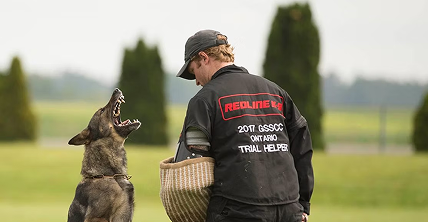
Helpers: Helper work is fun and exciting. Helpers work to develop the dog's natural fighting and guarding abilities. The helper wears the protective sleeve and learns how to teach the dog the skill and timing necessary to be successful, powerful and confident. At our club, we work with keen new helpers to show them how to be an actor and communicator. Able to read the dogs and also to emit emotion. As with any type of dog training timing and an instinctive feel for dogs goes a long way. If you are adventurous, in good physical condition and love dogs, helper work might be just what you are looking for!
IGP clubs emphasize education and training for their members. This sport is relatively new in North America so we're always keen to introduce new handlers to it and encourage potential helpers. Whether you're new to training dogs, already hold a few IGP titles, or are anywhere in between, Schutzhund clubs have a wealth of information and a variety of levels of expertise that can help you, your dog and your training. Plus IGP is such an amazing learning and bonding experience between you and your dog.
The Dogs
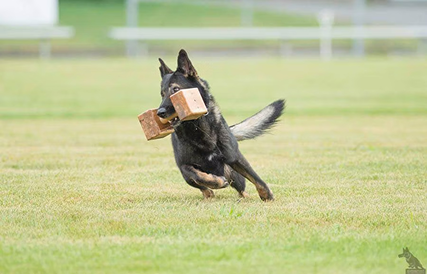
Schutzhund/IGP was initially developed for the German Shepherd dog, but many other breeds can show an aptitude for it, including Beauceron, Belgian Malinois, Belgian Tervueren, Bouvier de Flandres, Boxers, Briards, Dobermans, Dutch Shepherds, Giant Schnauzers, Rottweilers and more. Several unconventional IPG breeds include the Airedale Terrier, American Bulldog, American Pit Bull Terrier, American Staffordshire Terrier, Cane Corso Italiano and Hovawart. Some mixed breeds can and do compete in IPG as well.
All that said, the four most popular breeds for Schutzhund/IGP are: German Shepherds, Belgian Malinois, Rottweilers and Dobermans.
It’s important to note that the working representatives of these breeds differ from those found in the pet home. The working dogs have a more athletic conformation, a stronger temperament with natural aggression, and better energy and enthusiasm for the work. The individual dogs that excel in IGP typically come from bloodlines with a history of performance, and descend back to dogs bred to the European standards, even if bred in North America. These standards require that numerous criteria be met before the dogs are bred, such as achieving a conformation rating, working title, breed survey, and standard health tests for the breed.
Regardless of the breed, there are general characteristics that are considered ideal in a Schutzhund/IGP dog:
- A stable character
- High trainability
- A desire to work with and for the handler (biddability)
- Drive and desire for the work (work ethic)
- Some level of natural aggression and protective instinct
Additionally, they should be relatively easy to motivate, with an interest in food (food drive), interest in playing with and chasing toys and ball (prey drive), and a natural desire to bite their "prey" with a full, strong grip. Most importantly, however, the dog should show a courageous and resilient character, with an ability to cope with and think clearly under stress, as Schutzhund/IGP is designed to test the dog’s temperament under different scenarios and pressures. If you are interested in IGP, having the right dog is an important beginning step.

Getting ready for dog sports?
DogSport Gear was founded in Canada in 2002 by a couple working out of their home in British Columbia, Canada. Our belief is that well-made training equipment does not have to be overpriced. At DogSport Gear we strive to bring all levels of trainers professional quality training equipment at the best possible prices. Dog training is our passion, and our people have both trained and competed with their dogs locally, nationally and internationally. Dog sports is more than a hobby for us, it's a lifestyle.